

 Weight Loss
 Injury and Repair
 Muscle Building
 Anti-aging
 Cognitive Function
 3ml Benzyl Alcohol Bacteriostatic Water
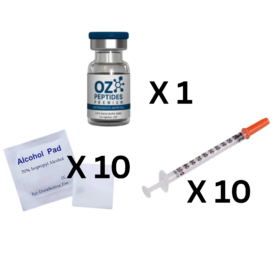 Starter Pack
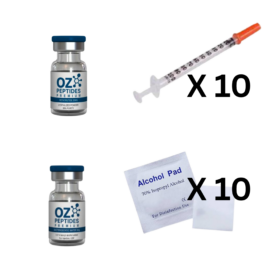 Retatrutide Starter Bundle
 5-Amino-1MQ Dosage Guide (5mg)
QuickStart Guide
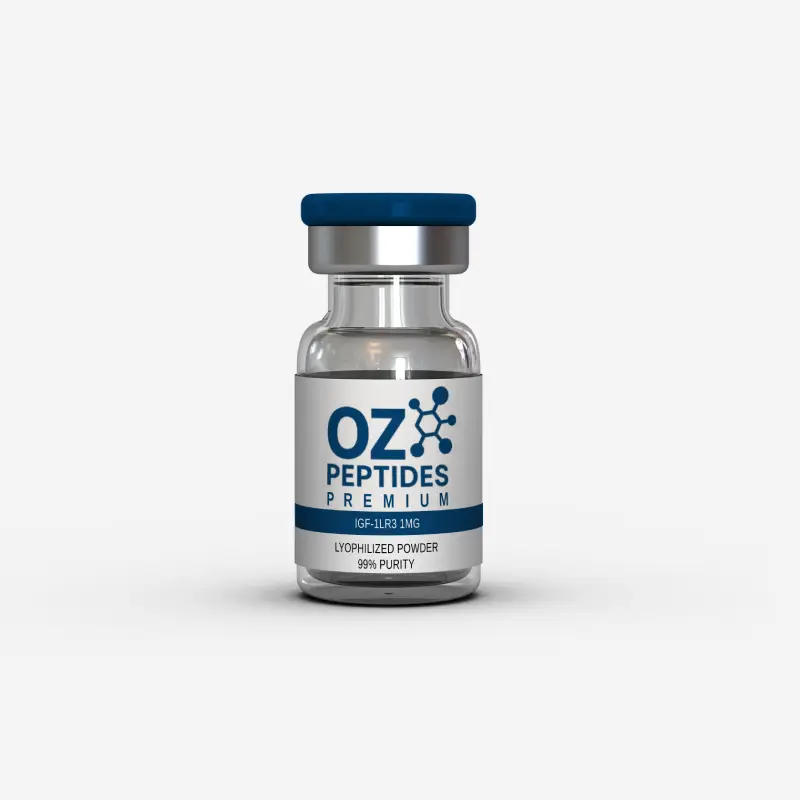
IGF-1 LR3 is a modified version of Insulin-like Growth Factor-1 designed with a much longer half-life and improved bioavailability compared to regular IGF-1. IGF-1 LR3 is commonly studied for its anabolic and metabolic effects, with research focusing on muscle growth, recovery, nutrient partitioning, and cellular repair.
- Reconstitution: Add 3.0 mL bacteriostatic water → ~0.333 mg/mL (333 mcg/mL)
- Typical Daily Range: 20–50 mcg once daily (subcutaneous), with gradual titration recommended
- Easy Measuring: At 0.333 mg/mL → 1 unit (U-100) = 0.01 mL ≈ 3.33 mcg
- Storage:
- Lyophilized: −20°C or colder for up to ~12 months
- Reconstituted: 2–8°C (fridge), use within ~30 days
- Avoid repeated freeze–thaw cycles
⚙️ How This Works
IGF-1 LR3 is a modified version of natural IGF-1 designed to stay active in the body much longer than regular IGF-1. Changes to the peptide structure reduce how strongly it binds to IGF binding proteins, which helps increase its availability and extend its activity from just minutes to several hours. This longer half-life allows for simpler once-daily research protocols and more stable levels throughout the day.
IGF-1 LR3 works by binding to IGF-1 receptors in the body, where it influences pathways linked to muscle growth, protein synthesis, recovery, and metabolic function. Because of these anabolic and nutrient-partitioning effects, IGF-1 LR3 is commonly studied in body composition and recovery research.
The compound also has insulin-like activity, meaning it can affect blood glucose levels, which is why careful dosing and gradual titration are important during the early stages of use. IGF-1 LR3 remains an investigational research compound and has not been approved for therapeutic human use.
🧪 Steps FOr reconstitution
- Draw 1.0 mL bacteriostatic water using a sterile syringe
- Inject slowly down the vial wall (don’t blast it, avoid foaming)
- Gently swirl or roll until fully dissolved (no shaking)
- Label with the date, store in the fridge at 2–8°C, keep out of light
- Use within 4 weeks after reconstitution
⚖️ BENIFITS & SIDE EFFECTS
Research on IGF-1 and related analogs suggests IGF-1 LR3 may support stronger anabolic signaling, increased protein synthesis, and metabolic activity through IGF-1 receptor pathways. Because it stays active in the body much longer than natural IGF-1, it may provide more stable systemic effects and improved bioavailability in research settings.
One of the biggest considerations with IGF-1 LR3 is its insulin-like effect on blood glucose. Low blood sugar symptoms can include shakiness, sweating, dizziness, confusion, or weakness, which is why careful dosing and proper meal timing are important. Conservative dosing protocols are strongly recommended, especially during the early stages of use and titration.
Mild injection-site irritation such as redness or discomfort can sometimes occur, though proper injection technique and rotating sites can help reduce this. Research also suggests that very long continuous use of IGF-1 LR3 may reduce responsiveness over time, which is why many protocols include cycling periods such as several weeks on followed by time off.
It’s also important to note that IGF-1 LR3 has never received FDA approval for therapeutic human use and remains an investigational research compound only.
💉 Dosing Protocol
- Start (Weeks 1–2): 20 mcg daily to assess tolerance, especially around blood sugar response
- Build Up (Weeks 3–4): Increase to 40 mcg daily if well tolerated and no major low blood sugar symptoms appear
- Maintain (Weeks 5–8): Hold at 50 mcg daily, which is considered the conservative upper range for most research protocols
- Frequency: Once daily (subcutaneous), commonly taken in the morning or post-workout with food
- Cycle Length: Typically 8 weeks, though some protocols extend to ~12 weeks
- Site Rotation: Rotate injection sites (abdomen, thighs, upper arms) to help avoid irritation or tissue buildup
📅 Standard Protocol (daily)
Frequency: Inject once daily under the skin, usually in the morning or after training with food to help manage blood sugar effects. This protocol uses a 3.0 mL mix to make measurements easier and more accurate. For doses under 10 units, a 30- or 50-unit insulin syringe can make the markings easier to read.
❄️ Storage (Keep It Potent)
- Lyophilized: Store at −20°C or colder, dry and out of light — good for up to 24 months
- Reconstituted: Keep in the fridge at 2–8°C, use within 4 weeks
- Let vials come to room temp before opening to avoid condensation getting inside
⚠️ Key Considerations
Use a fresh sterile insulin syringe every time and dispose of it properly in a sharps container. Rotate injection sites (abdomen, thighs, upper arms) to avoid irritation and buildup. If your dose runs over 10 mg with a 1.0 mL mix, you’ll need multiple vials to hit the volume, and if total volume goes past 1.0 mL, split it into two injections at different sites for better absorption. Inject slowly and give it a few seconds before pulling out to make sure the full dose is delivered. Keep a simple log of dose, date, and injection sites so nothing drifts, and most important, titrate up gradually, don’t rush it or skip steps unless you want your gut to push back.
💉 How to Inject (SubQ Basics)
- Wipe the vial stopper and injection site with alcohol and let it dry fully
- Pinch a small skinfold and insert the needle at 45–90° into subcutaneous tissue
- Don’t aspirate, just inject slow and steady
- If volume goes over 1.0 mL, split into two injections at different sites (e.g. left/right abdomen)
- Rotate sites each time (abdomen is go-to, but thighs and upper arms work too) to avoid irritation and buildup
- After injecting, wait a few seconds before pulling out to make sure the full dose goes in
- Dispose of syringes straight away in a proper sharps container
🏃♂️ Lifestyle Support (for best results)
For best results with IGF-1 LR3, keep protein intake high to support recovery and anabolic processes, and stay consistent with meal timing to help keep blood sugar stable. Resistance training paired with proper recovery is important, since IGF-1 pathways respond strongly to training and mechanical stress. Aim for 7–9 hours of quality sleep each night to support natural recovery, growth factor production, and tissue repair. Staying well hydrated can also help support metabolism and peptide distribution throughout the body. During dose increases, paying attention to blood sugar symptoms and monitoring glucose where appropriate can help keep protocols more controlled and consistent.
⚠️ Research Use Disclaimer
This content is for educational and research awareness purposes only, not medical advice, diagnosis, or treatment. IGF-1 LR3 is an investigational compound and is not approved for clinical use. All information is drawn from published research and clinical trial data, and is not intended to promote or guide off-label or human use.
📚 References
• Biomolecules (MDPI) — Insulin-Like Growth Factor-1 (IGF-1) and Its Monitoring in Medical Diagnostics and Sports
https://www.mdpi.com/2218-273X/11/11/1645
• Frontiers in Bioengineering & Biotechnology — Insulin-Like Growth Factor-1: A Promising Therapeutic Target for Peripheral Nerve Injury
https://www.frontiersin.org/articles/10.3389/fbioe.2021.695624/full
• PubMed — Detection of LongR3-IGF-I and Related Analogues for Anti-Doping Analysis
https://pubmed.ncbi.nlm.nih.gov/28836316/
• Mayo Clinic — Mecasermin (Subcutaneous Route): Proper Use & Handling
https://www.mayoclinic.org/drugs-supplements/mecasermin-subcutaneous-route/proper-use/drg-20072660
• CDC — Preventing Unsafe Injection Practices
https://www.cdc.gov/injectionsafety/one-and-only.html
• NCBI Bookshelf — Administering Subcutaneous Medications: Clinical Best Practices
https://www.ncbi.nlm.nih.gov/books/NBK594390/
