

 Weight Loss
 Injury and Repair
 Muscle Building
 Anti-aging
 Cognitive Function
 3ml Benzyl Alcohol Bacteriostatic Water
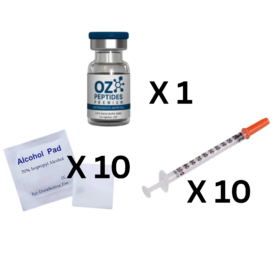 Starter Pack
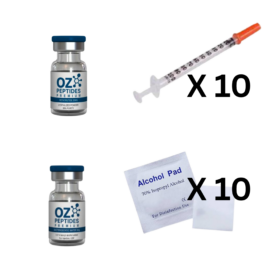 Retatrutide Starter Bundle
 5-Amino-1MQ Dosage Guide (5mg)
Single Peptides, Peptide Protcols
BPC-157 Dosage Guide (10mg)
QuickStart Guide
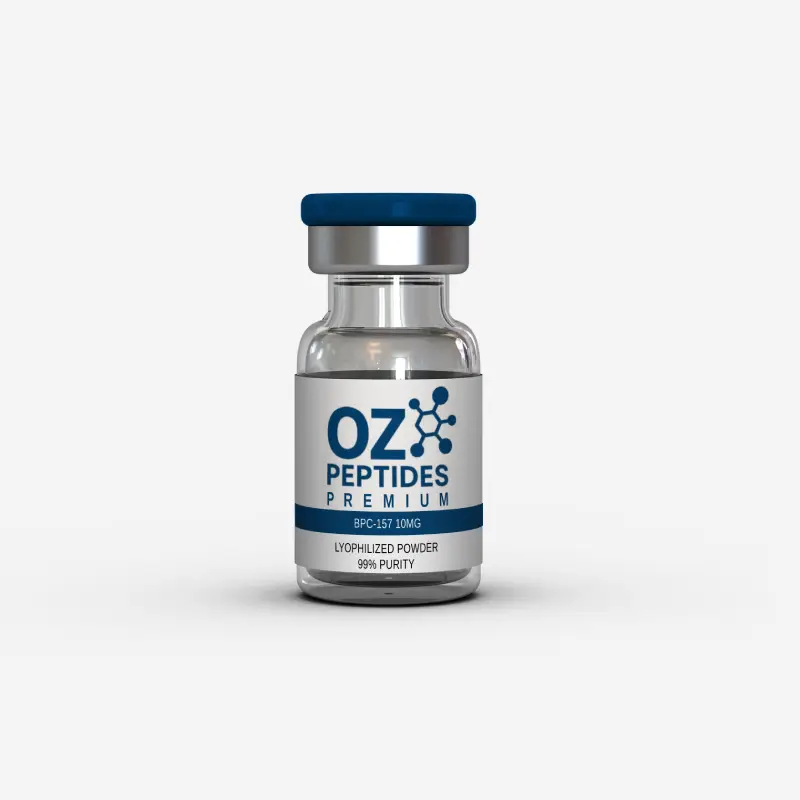
BPC-157 (Body Protection Compound-157) is a synthetic 15-amino-acid peptide derived from a naturally occurring gastric protein sequence that has been widely studied for its potential role in tissue repair, recovery, and cellular protection. Preclinical research has demonstrated effects on wound healing, tendon and ligament repair, inflammation modulation, and gastrointestinal health, making it one of the most researched recovery-focused peptides available. While human clinical data remains limited, interest in BPC-157 continues to grow due to its broad range of regenerative and protective properties observed in experimental models.
This educational protocol presents a once-daily subcutaneous approach using a practical dilution that allows for simple, accurate insulin-syringe measurements.
• Reconstitution: Add 3.0 mL bacteriostatic water for a final concentration of approximately 3.33 mg/mL
• Typical Daily Range: 200–600 mcg once daily with gradual titration recommended
• Easy Measuring: At 3.33 mg/mL, 1 unit on a U-100 insulin syringe ≈ 33.3 mcg
• Storage:
- Lyophilised: Store at −20 °C (−4 °F)
- After reconstitution: Refrigerate at 2–8 °C (35.6–46.4 °F)
- Avoid repeated freeze-thaw cycles
BPC-157 is frequently paired with TB-500 for broader recovery support, combining localized tissue repair with whole-body regenerative pathways. It is also commonly stacked with CJC-1295 + Ipamorelin or IGF-1 LR3 in recovery and performance-focused protocols where tissue repair and recovery capacity are a priority.
⚙️ How This Works
🧪 Steps FOr reconstitution
- Draw 1.0 mL bacteriostatic water using a sterile syringe
- Inject slowly down the vial wall (don’t blast it, avoid foaming)
- Gently swirl or roll until fully dissolved (no shaking)
- Label with the date, store in the fridge at 2–8°C, keep out of light
- Use within 4 weeks after reconstitution
⚖️ BENIFITS & SIDE EFFECTS
💉 Dosing Protocol
📅 Standard Protocol
❄️ Storage (Keep It Potent)
⚠️ Key Considerations
💉 How to Inject (SubQ Basics)
🏃♂️ Lifestyle Support (for best results)
⚠️ Research Use Disclaimer
