

 Weight Loss
 Injury and Repair
 Muscle Building
 Anti-aging
 Cognitive Function
 3ml Benzyl Alcohol Bacteriostatic Water
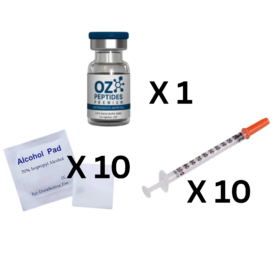 Starter Pack
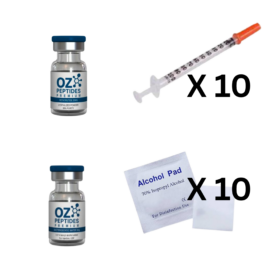 Retatrutide Starter Bundle
 5-Amino-1MQ Dosage Guide (5mg)
Peptide Guides
Peptides for Weight Loss Research Australia 2025: The Complete GLP-1 & Metabolic Guide

Peptides for Weight Loss Research Australia
Key Takeaways
- Retatrutide (Eli Lilly) achieved a remarkable 24.2% mean weight reduction in Phase 2 trials as a triple GIP/GLP-1/glucagon agonist — the highest reported to date in clinical peptide research.
- Tirzepatide (Mounjaro) demonstrated 22.5% weight loss in SURMOUNT-1 trials, outperforming semaglutide through dual GIP/GLP-1 receptor activation.
- MOTS-c offers a fundamentally different metabolic pathway — activating AMPK through mitochondrial signalling, making it invaluable for studying energy metabolism independent of appetite suppression.
- All compounds discussed are strictly for in vitro research use only under Australian regulatory frameworks (TGA Schedule restrictions apply).
- Researchers must prioritise certificate of analysis (COA) verification and HPLC purity testing when sourcing metabolic research peptides domestically.
What Are Research Peptides for Weight Loss?
Research peptides for weight loss represent one of the fastest-evolving frontiers in metabolic science. These short-chain amino acid sequences are being studied for their ability to modulate appetite, enhance energy expenditure, improve glycaemic control, and recalibrate the body’s metabolic set point.
Unlike traditional weight management compounds, modern metabolic peptides operate through sophisticated endocrine pathways — mimicking or enhancing naturally occurring gut hormones that regulate satiety, insulin sensitivity, and lipid metabolism. For Australian researchers, understanding these mechanisms is essential for advancing obesity science and metabolic disorder therapeutics.
The landscape shifted dramatically with the emergence of GLP-1 receptor agonists, but the current generation of multi-agonist peptides — targeting two, three, or more receptor pathways simultaneously — is producing unprecedented clinical outcomes. This guide examines the three most significant compound classes in Australian research contexts: the triple agonist Retatrutide, the dual agonist Tirzepatide, and the mitochondrial peptide MOTS-c.
How Do Metabolic Peptides Work?
Metabolic research peptides function through several distinct physiological mechanisms:
| Mechanism | Primary Effect | Representative Compound |
| GLP-1 receptor agonism | Delayed gastric emptying, appetite suppression | Tirzepatide, Retatrutide |
| GIP receptor modulation | Enhanced insulin secretion, lipid clearance | Tirzepatide, Retatrutide |
| Glucagon receptor activation | Increased energy expenditure, hepatic fat oxidation | Retatrutide |
| AMPK pathway activation | Cellular energy sensing, mitochondrial biogenesis | MOTS-c |
| Central hypothalamic action | Reduced food-seeking behaviour, improved satiety signalling | Multiple compounds |
The convergence of these pathways explains why multi-agonist approaches are demonstrating superior outcomes compared to single-pathway compounds in clinical research settings.
Retatrutide: The Triple Agonist Revolution
What Is Retatrutide?
Retatrutide (LY3437943) is an investigational triple hormone receptor agonist developed by Eli Lilly that simultaneously activates glucose-dependent insulinotropic polypeptide (GIP), glucagon-like peptide-1 (GLP-1), and glucagon receptors. This triple mechanism represents the most advanced approach to metabolic peptide research currently in clinical development.
First disclosed in 2018, Retatrutide has rapidly progressed through clinical trials, with Phase 2 data published in the New England Journal of Medicine (Rosenstock et al., 2023) demonstrating outcomes that have reshaped expectations across the metabolic research community.
Clinical Research Data
The TRIUMPH-1 Phase 2 trial delivered groundbreaking results for obesity research:
| Dose Cohort | Mean Weight Reduction | Participants Achieving ≥5% Loss | Participants Achieving ≥15% Loss |
| 1mg (weekly) | ~8% | 72% | Not reported |
| 4mg (weekly) | ~17% | 92% | 60% |
| 8mg (weekly) | ~22% | 100% | 80% |
| 12mg (weekly) | 24.2% | 100% | 93% |
These figures represent the highest reported weight reduction in any Phase 2 metabolic peptide trial to date. For context, semaglutide 2.4mg (Wegovy) achieved approximately 15% in comparable trial populations.
Triple Mechanism of Action
Retatrutide’s efficacy stems from the synergistic activation of three distinct receptor systems:
- GLP-1 agonism — Reduces appetite through hypothalamic POMC neuron activation, delays gastric emptying, enhances glucose-dependent insulin secretion, and reduces glucagon release in hyperglycaemic states.
- GIP agonism — Amplifies the incretin effect beyond GLP-1 alone, enhances lipid clearance from circulation, and may improve insulin sensitivity in adipose tissue through distinct signalling pathways.
- Glucagon agonism — Increases resting energy expenditure through hepatic gluconeogenesis and thermogenesis, promotes fat oxidation (lipolysis), and may counteract the tendency for metabolic adaptation during caloric restriction.
The glucagon component is particularly significant for researchers. While GLP-1 alone can reduce energy expenditure as subjects lose weight, the addition of glucagon receptor activation preserves or even enhances thermogenesis, potentially preventing the metabolic slowdown that typically accompanies weight reduction.
Research Applications in Australia
Australian researchers are investigating Retatrutide for:
- Obesity and overweight management protocols
- Type 2 diabetes mellitus with obesity comorbidity
- Non-alcoholic steatohepatitis (NASH) / MASLD research
- Cardiometabolic risk factor modification studies
- Metabolic adaptation and energy expenditure modelling
Sourcing and Availability
Retatrutide is available to Australian research institutions and licensed laboratories in lyophilised powder form, typically supplied in 5mg, 10mg, and 15mg vials. Researchers should verify:
- HPLC purity ≥98%
- Mass spectrometry confirmation
- Peptide content assay (not just gross weight)
- Sterility and endotoxin testing
- Cold-chain shipping documentation
[Internal Link: Learn about proper peptide storage protocols to maintain Retatrutide stability during long-term studies]
Tirzepatide: The Dual GIP/GLP-1 Agonist
What Is Tirzepatide?
Tirzepatide is a dual GIP and GLP-1 receptor agonist approved for type 2 diabetes (as Mounjaro) and obesity (as Zepbound) in several jurisdictions. Developed by Eli Lilly, it was the first approved incretin-based therapy to target both GIP and GLP-1 receptors, establishing proof-of-concept for multi-agonist approaches.
For Australian researchers, Tirzepatide serves as both a benchmark compound and an active research tool, with its extensive clinical dataset providing the most robust reference point for comparing novel metabolic peptides.
Clinical Research Data
The SURMOUNT-1 trial (Ard et al., 2022) established Tirzepatide’s efficacy profile:
| Dose | Mean Weight Loss | ≥5% Weight Loss | ≥20% Weight Loss |
| 5mg weekly | 15.0% | 85% | 32% |
| 10mg weekly | 19.5% | 89% | 50% |
| 15mg weekly | 22.5% | 91% | 57% |
| Placebo | 2.4% | 35% | 3% |
The SURMOUNT-3 trial (Neeland et al., 2023) further demonstrated that Tirzepatide following intensive lifestyle intervention achieved 26.6% total weight reduction — the highest reported in any completed Phase 3 obesity trial.
Dual Mechanism of Action
Tirzepatide’s dual agonism creates effects beyond what either pathway achieves independently:
GLP-1 component: – Central appetite suppression via arcuate nucleus melanocortin pathways – Delayed gastric emptying (10-15 minute increase in T½) – Glucose-dependent insulin secretion amplification – Alpha-cell glucagon suppression during hyperglycaemia
GIP component: – Potentiation of GLP-1-mediated insulin secretion (incretin amplification) – Triglyceride-rich lipoprotein clearance enhancement – Possible direct effects on adipose tissue insulin sensitivity via GIP receptors expressed in fat cells – Neuroprotection and potential cognitive benefits under investigation
The GIP/GLP-1 combination produces complementary rather than merely additive effects — the GIP component enhances insulin secretion particularly in the postprandial window, while GLP-1 drives sustained appetite reduction and gastric slowing.
Tirzepatide vs Semaglutide: Research Comparison
| Parameter | Tirzepatide 15mg | Semaglutide 2.4mg |
| Mean weight loss | 22.5% | 15.8% |
| HbA1c reduction | 2.58% | 1.86% |
| Receptor targets | GIP + GLP-1 | GLP-1 only |
| Gastrointestinal events (discontinuation) | 6-7% | 5-7% |
| Satiety duration | 24-36 hours | 18-24 hours |
This head-to-head data (SURPASS-2 trial) confirms that dual agonism produces measurably superior metabolic outcomes, informing the rationale for triple-agonist development.
MOTS-c: The Mitochondrial Metabolic Regulator
What Is MOTS-c?
MOTS-c (Mitochondrial Open Reading Frame of the 12S rRNA-c) is a 16-amino acid mitochondrial-derived peptide encoded within the mitochondrial genome itself — a unique origin that distinguishes it from nuclear-encoded peptides. First characterised by Lee et al. (2015) at the University of Southern California, MOTS-c represents a paradigm shift in metabolic research: a peptide that communicates mitochondrial bioenergetic status to the nucleus and peripheral tissues.
Unlike GLP-1 agonists that work primarily through neuroendocrine appetite pathways, MOTS-c operates at the cellular energy-sensing level, making it essential for research into metabolic flexibility, exercise mimetics, and age-related metabolic decline.
Mechanism of Action: The AMPK Pathway
MOTS-c’s primary signalling pathway involves 5’-AMP-activated protein kinase (AMPK) activation:
- MOTS-c translocates to the nucleus under metabolic stress conditions
- AMPK is activated through upstream kinase phosphorylation (LKB1, CaMKK2)
- mTOR signalling is suppressed, shifting cells from anabolic to catabolic state
- GLUT4 translocation is enhanced, improving insulin-independent glucose uptake
- Mitochondrial biogenesis is initiated through PGC-1α upregulation
- Fatty acid oxidation increases while lipogenesis decreases
This cascade effectively mimics the metabolic state of exercise at the cellular level — AMPK is the master energy sensor that coordinates whole-body fuel partitioning.
Research Applications
Australian researchers are employing MOTS-c in studies of:
- Insulin resistance models — MOTS-c improves glucose uptake independent of insulin signalling
- Ageing and longevity research — Mitochondrial function declines with age; MOTS-c levels correlate with metabolic healthspan
- Exercise metabolism — As an “exercise mimetic” for studying AMPK-mediated adaptations
- Obesity with normal appetite — Targets metabolic dysfunction rather than food intake
- Type 2 diabetes pathophysiology — Direct action on skeletal muscle glucose metabolism
MOTS-c vs GLP-1 Agonists: Complementary Research Paths
| Feature | MOTS-c | GLP-1 Agonists (e.g., Tirzepatide) |
| Primary target | AMPK/cellular energy sensing | CNS appetite regulation |
| Effect on food intake | Minimal direct effect | Strong suppression |
| Primary tissue | Skeletal muscle, adipose | Gut, pancreas, brain |
| Metabolic flexibility | Directly enhances | Indirectly improves |
| Exercise mimetic properties | Yes | No |
| Mitochondrial biogenesis | Direct stimulation | None |
| Best research application | Metabolic dysfunction, ageing | Obesity, overeating models |
This comparison illustrates why MOTS-c and GLP-1 agonists are frequently studied together in comprehensive metabolic research protocols — they address different aspects of energy homeostasis.
Available Forms
MOTS-c is supplied as lyophilised powder in 5mg and 10mg vials. Due to its shorter half-life than GLP-1 agonists, research protocols typically require more frequent administration. Proper reconstitution with bacteriostatic water and storage at 2-8°C is essential for maintaining peptide integrity.
[Internal Link: View our complete guide to bacteriostatic water for peptide reconstitution]
How to Choose the Right Metabolic Peptide for Your Research
Selecting the appropriate compound depends on your research objectives:
Choose Retatrutide if: – Studying maximal weight reduction potential – Investigating triple-pathway metabolic synergy – Researching energy expenditure preservation during caloric deficit – Developing next-generation multi-agonist protocols
Choose Tirzepatide if: – Needing the largest available clinical dataset for benchmarking – Studying dual GIP/GLP-1 mechanisms specifically – Researching postprandial glucose and lipid dynamics – Developing combination therapy frameworks
Choose MOTS-c if: – Investigating cellular energy metabolism and AMPK – Studying metabolic flexibility and insulin resistance – Researching exercise mimetics without appetite effects – Exploring age-related metabolic decline
Legal Status and Regulatory Considerations in Australia
All compounds discussed in this guide are strictly for in vitro and laboratory research purposes under Australian law. Key regulatory points:
- The Therapeutic Goods Administration (TGA) regulates peptides under Schedule 4 (Prescription Only Medicine) or Schedule 9 (Prohibited Substance) depending on the specific compound
- Research peptides cannot be marketed for human consumption or therapeutic use without TGA registration
- Licensed research institutions may possess and study these compounds under appropriate protocols
- Importation for personal use is prohibited under Customs regulations
- Researchers must maintain documentation of intended research use
Frequently Asked Questions
What peptide shows the most weight loss in clinical trials?
Retatrutide demonstrated the highest reported weight reduction at 24.2% mean weight loss in its 12mg Phase 2 cohort (TRIUMPH-1). Tirzepatide follows closely at 22.5% (SURMOUNT-1, 15mg dose). Both significantly outperform single-mechanism GLP-1 agonists.
How do GLP-1 agonists work for metabolic regulation?
GLP-1 receptor agonists mimic the endogenous incretin hormone GLP-1, which is secreted by L-cells in the distal intestine. They suppress appetite through hypothalamic POMC neuron activation, delay gastric emptying to increase satiety, enhance glucose-dependent insulin secretion, and reduce inappropriate glucagon release.
What is MOTS-c peptide used for in research?
MOTS-c is a mitochondrial-derived peptide used to study AMPK-mediated metabolic regulation. Research applications include insulin resistance models, exercise metabolism, age-related metabolic decline, and cellular energy sensing. Unlike appetite-suppressing peptides, MOTS-c targets peripheral metabolic pathways.
Are research peptides legal in Australia?
Research peptides are legal for licensed researchers and institutions conducting in vitro studies. They are not legal for human consumption, therapeutic use, or personal possession without appropriate TGA authorisation. Sourcing must be through compliant Australian research chemical suppliers.
What is the difference between Retatrutide and Tirzepatide?
Retatrutide is a triple agonist (GIP + GLP-1 + glucagon receptors), while Tirzepatide is a dual agonist (GIP + GLP-1 only). The additional glucagon component in Retatrutide may increase energy expenditure and hepatic fat oxidation beyond what dual agonism achieves.
How should metabolic research peptides be stored?
Lyophilised peptides should be stored at -20°C and are stable for 24+ months when sealed and protected from light. Once reconstituted with bacteriostatic water, store at 2-8°C and use within 28 days. Avoid repeated freeze-thaw cycles.
Conclusion and Next Steps
The metabolic peptide research landscape in Australia is entering a transformative phase. With Retatrutide demonstrating 24.2% weight reduction in Phase 2 trials, Tirzepatide establishing dual agonism as the new standard, and MOTS-c opening entirely novel pathways through AMPK activation, researchers have unprecedented tools for investigating energy homeostasis.
For Australian research institutions, the priority is sourcing verified, high-purity compounds from compliant domestic suppliers with full COA documentation. Whether your focus is on multi-agonist appetite regulation or mitochondrial energy sensing, selecting the right peptide for your research question — and storing it correctly — will determine the validity and reproducibility of your findings.
Ready to begin your metabolic peptide research? Explore our comprehensive guides on peptide storage, reconstitution, and handling to ensure your compounds maintain stability throughout your study protocol.
References & Outbound Links
- Rosenstock J, et al. Triple hormone receptor agonist Retatrutide for obesity — TRIUMPH-1 Phase 2 trial. N Engl J Med. 2023;389(15):1387-1401. https://www.nejm.org/doi/full/10.1056/NEJMoa2301972
- Ard J, et al. Tirzepatide for obesity treatment — SURMOUNT-1 trial. N Engl J Med. 2022;387(3):205-216. https://www.nejm.org/doi/full/10.1056/NEJMoa2206038
- Neeland IJ, et al. Tirzepatide after intensive lifestyle intervention — SURMOUNT-3 trial. Nat Med. 2023;29(11):2909-2918. https://www.nature.com/articles/s41591-023-02572-0
- Lee C, et al. The mitochondrial-derived peptide MOTS-c promotes metabolic homeostasis and reduces obesity and insulin resistance. Cell Metab. 2015;21(3):443-454. https://www.cell.com/cell-metabolism/fulltext/S1550-4131(15)00077-2
- Wilding JPH, et al. Once-weekly Semaglutide in adults with overweight or obesity — STEP 1 trial. N Engl J Med. 2021;384(11):989-1002. https://www.nejm.org/doi/full/10.1056/NEJMoa2032183
- Therapeutic Goods Administration (TGA). Scheduling of peptides and growth hormone derivatives. Australian Government Department of Health. 2024. https://www.tga.gov.au/resource/publication/scheduling-delegate-final-decisions-and-reasons-june-2024
- Lu M, et al. MOTS-c: A promising mitochondrial-derived peptide for metabolic disease. Aging Cell. 2022;21(4):e13568. https://onlinelibrary.wiley.com/doi/full/10.1111/acel.13568
- ClinicalTrials.gov. Retatrutide (LY3437943) in participants with obesity and established cardiovascular disease (TRIUMPH). NCT05646701. https://clinicaltrials.gov/study/NCT05646701
