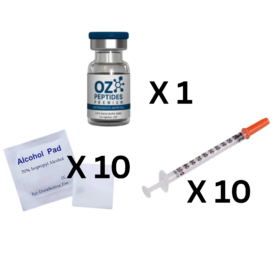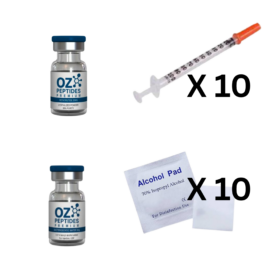


Tirzepatide Dosage Guide (20mg)

QuickStart Guide

Tirzepatide is a dual incretin receptor agonist that activates both GLP-1 and GIP receptors, helping regulate appetite, blood sugar, and energy balance through multiple metabolic pathways. By enhancing glucose-dependent insulin secretion, reducing glucagon release, slowing gastric emptying, and promoting feelings of fullness, Tirzepatide has become one of the most researched peptides for body composition and weight management. Clinical studies have demonstrated significant improvements in weight reduction and metabolic markers, with many participants achieving substantial and sustained results over time.

Its long half-life of approximately 5 days allows for convenient once-weekly subcutaneous administration, making it a practical option for long-term protocols.

Reconstitution: Add 2.0 mL bacteriostatic water for a final concentration of 10.0 mg/mL
Typical Weekly Range: 2.5–15 mg once weekly with gradual 4-week titration steps recommended
Easy Measuring: At 10.0 mg/mL, 1 unit on a U-100 insulin syringe = 50 mcg
Storage:

  • Lyophilised: Store at −20 °C (−4 °F)
  • After reconstitution: Refrigerate at 2–8 °C (35.6–46.4 °F)
  • Use within 28 days of reconstitution

Tirzepatide is often paired with Cagrilintide for enhanced appetite control or combined with 5-Amino-1MQ in body recomposition and metabolic support protocols.
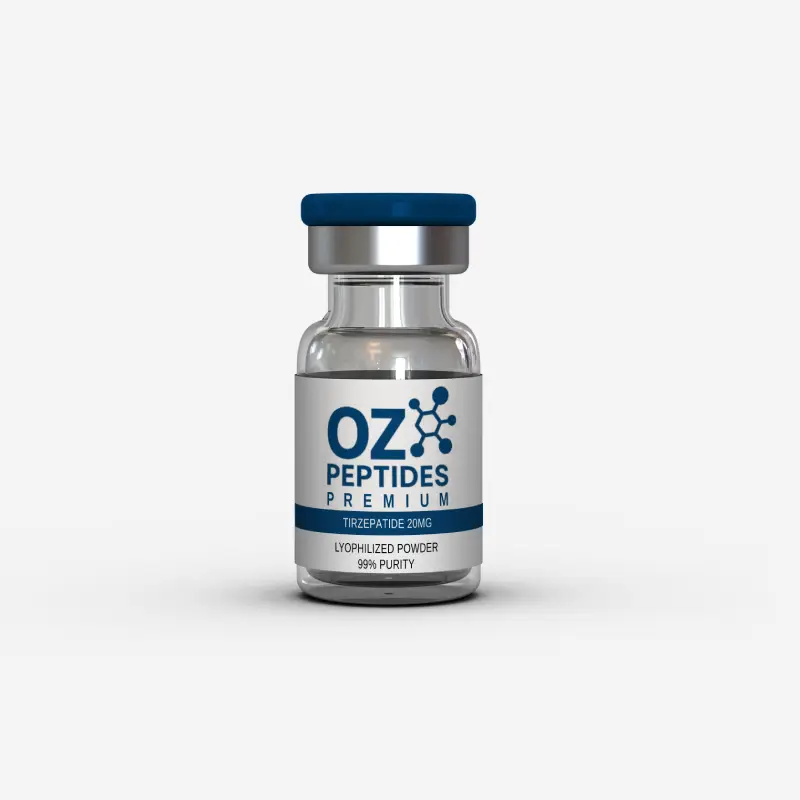
Tirzepatide peptide vial for weight loss and appetite control Australia

⚙️ How This Works


Tirzepatide is a dual incretin receptor agonist that activates both GLP-1 (glucagon-like peptide-1) and GIP (glucose-dependent insulinotropic polypeptide) receptors. By targeting both pathways simultaneously, it helps enhance glucose-dependent insulin secretion, reduce glucagon release, slow gastric emptying, and increase feelings of fullness after eating.

This dual mechanism is believed to provide greater metabolic effects than targeting GLP-1 alone, helping support improved appetite control, reduced calorie intake, and significant weight reduction. Clinical research has shown that the addition of GIP activity may contribute to the enhanced body composition and weight management outcomes observed in Tirzepatide studies.

With a half-life of approximately 5 days, Tirzepatide provides sustained activity throughout the week, allowing for convenient once-weekly subcutaneous administration.

🧪 Steps FOr reconstitution

  1. Draw 1.0 mL bacteriostatic water using a sterile syringe
  2. Inject slowly down the vial wall (don’t blast it, avoid foaming)
  3. Gently swirl or roll until fully dissolved (no shaking)
  4. Label with the date, store in the fridge at 2–8°C, keep out of light
  5. Use within 4 weeks after reconstitution

⚖️ BENIFITS & SIDE EFFECTS

Clinical trials and published research have demonstrated that Tirzepatide may provide significant benefits for body composition, appetite control, and metabolic health. Studies have consistently reported substantial reductions in HbA1c levels in individuals with type 2 diabetes, alongside meaningful weight loss outcomes that often exceed those observed with selective GLP-1 receptor agonists alone.

Research has also shown improvements in several cardiometabolic markers, including blood pressure, lipid profiles, and other indicators associated with metabolic health. These effects are believed to result from the combined activation of both GLP-1 and GIP pathways, which work together to influence appetite regulation, energy balance, and glucose metabolism.

The most commonly reported side effects are gastrointestinal in nature and may include nausea, diarrhea, vomiting, constipation, or temporary digestive discomfort. These effects are generally mild to moderate and tend to occur more frequently during dose escalation, which is why gradual titration is commonly recommended. Mild injection-site reactions such as redness, itching, or irritation may also occasionally occur following subcutaneous administration.

💉 Dosing Protocol

  • Start: 200–250 mcg daily, increasing by 100–250 mcg every 1–2 weeks as tolerated
  • Target: 500–1000 mcg daily by around Weeks 4–8
  • Frequency: Once daily (subcutaneous) during the loading phase
  • Cycle Length: Typically 6–8 weeks for the initial tanning phase
  • Maintenance: After loading, many protocols switch to 500–1000 mcg once or twice weekly to help maintain pigmentation
  • Timing: Any consistent time works; rotate injection sites regularly to help reduce irritation
 

📅 Standard Protocol

Frequency: Inject once weekly subcutaneously on the same day each week to maintain consistent blood levels. If a weekly dose requires more than one injection, administer them consecutively using different injection sites.

Dose increases are typically introduced every 4 weeks to help minimise gastrointestinal side effects and improve overall tolerability. Higher weekly doses may be used in later stages of a protocol if well tolerated and aligned with individual goals.

❄️ Storage (Keep It Potent)

  • Lyophilized: Store at −20°C or colder, dry and out of light — good for up to 24 months
  • Reconstituted: Keep in the fridge at 2–8°C, use within 4 weeks
  • Let vials come to room temp before opening to avoid condensation getting inside


⚠️ Key Considerations

Use a fresh sterile insulin syringe every time and dispose of it properly in a sharps container. Rotate injection sites (abdomen, thighs, upper arms) to avoid irritation and buildup. If your dose runs over 10 mg with a 1.0 mL mix, you’ll need multiple vials to hit the volume, and if total volume goes past 1.0 mL, split it into two injections at different sites for better absorption. Inject slowly and give it a few seconds before pulling out to make sure the full dose is delivered. Keep a simple log of dose, date, and injection sites so nothing drifts, and most important, titrate up gradually, don’t rush it or skip steps unless you want your gut to push back.


💉 How to Inject (SubQ Basics)

  • Wipe the vial stopper and injection site with alcohol and let it dry fully
  • Pinch a small skinfold and insert the needle at 45–90° into subcutaneous tissue
  • Don’t aspirate, just inject slow and steady
  • If volume goes over 1.0 mL, split into two injections at different sites (e.g. left/right abdomen)
  • Rotate sites each time (abdomen is go-to, but thighs and upper arms work too) to avoid irritation and buildup
  • After injecting, wait a few seconds before pulling out to make sure the full dose goes in
  • Dispose of syringes straight away in a proper sharps container


🏃‍♂️ Lifestyle Support (for best results)

Tirzepatide works best when combined with healthy lifestyle habits that support long-term body composition and metabolic goals. A balanced, calorie-appropriate diet can help maximise results, while the appetite-reducing effects of Tirzepatide may naturally make it easier to maintain a consistent calorie deficit.

Prioritising adequate protein intake is important during weight loss phases to help preserve lean muscle mass and support recovery. Combining resistance training with regular cardiovascular activity can further enhance metabolic health, improve body composition, and support overall performance.

Staying well hydrated is also recommended, particularly during the early stages of a protocol when gastrointestinal side effects may be more noticeable. Quality sleep and effective stress management remain important factors for recovery, appetite regulation, and maintaining consistency throughout a long-term weight management plan.


⚠️ Research Use Disclaimer

This content is for educational and research awareness purposes only, not medical advice, diagnosis, or treatment. Tirzepatide is an investigational compound and is not approved for clinical use. All information is drawn from published research and clinical trial data and is not intended to promote or guide off-label or human use.


REFERENCES


• NCBI Bookshelf (StatPearls) — Tirzepatide: Pharmacology, Dosing & Clinical Use
https://www.ncbi.nlm.nih.gov/books/NBK585056/

• Frontiers in Endocrinology — GIP/GLP-1 Receptor Agonist Tirzepatide for Type 2 Diabetes and Obesity
https://www.frontiersin.org/articles/10.3389/fendo.2022.1004044/full

• The Lancet — Efficacy and Safety of Tirzepatide in Patients With Type 2 Diabetes (Phase 2 Trial)
https://pubmed.ncbi.nlm.nih.gov/30342694/

• New England Journal of Medicine — Tirzepatide Once Weekly for the Treatment of Obesity
https://www.nejm.org/doi/full/10.1056/NEJMoa2206038

• FDA Prescribing Information — Mounjaro (Tirzepatide) Injection
https://www.accessdata.fda.gov/drugsatfda_docs/label/2022/215866s000lbl.pdf

• Mayo Clinic — Tirzepatide (Subcutaneous Route) – Clinical Overview
https://www.mayoclinic.org/drugs-supplements/tirzepatide-subcutaneous-route/description/drg-20534045

• MedlinePlus — Subcutaneous Injection Technique & Site Rotation
https://medlineplus.gov/ency/patientinstructions/000430.htm

• NCBI Bookshelf — Best Practices for Injection & Aseptic Technique
https://www.ncbi.nlm.nih.gov/books/NBK556121/