

TB-500 Dosage Guide (10mg)

QuickStart Guide

TB-500 is a synthetic peptide fragment based on the active region of thymosin beta-4 (Tβ4), a naturally occurring protein involved in tissue repair, recovery, and regeneration. It’s widely researched for its role in supporting muscle recovery, reducing inflammation, and improving healing response in connective tissue and soft tissue injuries.

This educational protocol outlines a once-daily subcutaneous approach using a practical dilution for simple and accurate insulin-syringe measurements in research settings.

Reconstitution: Add 3.0 mL bacteriostatic water for a final concentration of ~3.33 mg/mL
Typical Daily Range: 500–1000 mcg once daily with gradual titration recommended
Easy Measuring: At 3.33 mg/mL, 1 unit on a U-100 insulin syringe ≈ 33.3 mcg
Storage:

  • Lyophilised: Store at −20 °C (−4 °F)
  • After reconstitution: Refrigerate at 2–8 °C (35.6–46.4 °F)
  • Do not freeze reconstituted solution

TB-500 is often paired with BPC-157 for broader recovery support, combining local tissue repair with full-body recovery and regeneration pathways.
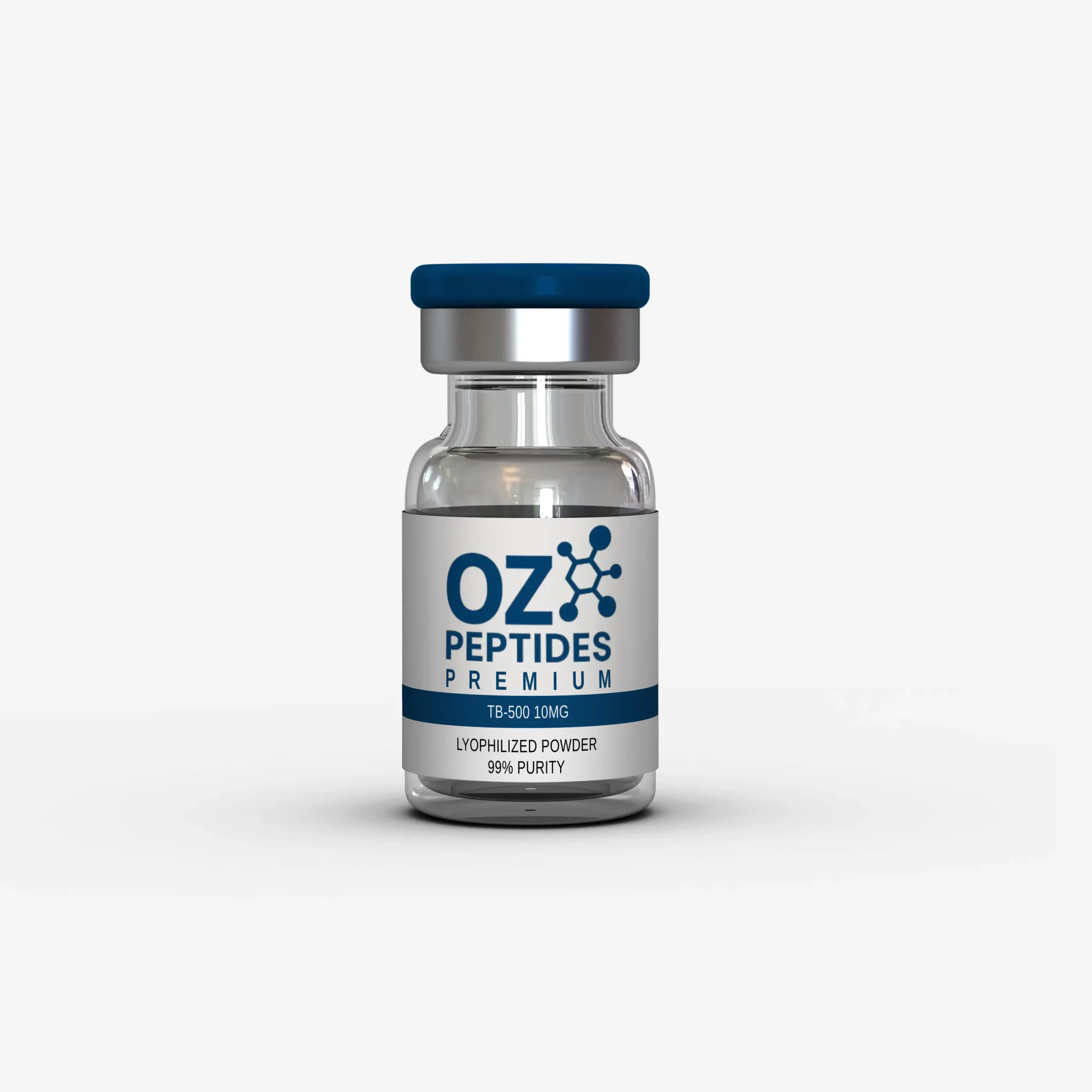
TB-500 AUSTRALIA PEPTIDE

⚙️ How This Works

TB-500 represents the active N-terminal fragment of thymosin beta-4, specifically the heptapeptide sequence Ac-LKKTETQ. This region is responsible for many of the regenerative and repair-related effects associated with the full thymosin beta-4 protein, particularly its ability to support cell migration, tissue repair, and actin regulation.

Preclinical research has shown TB-500 may help promote angiogenesis (new blood vessel formation), accelerate wound healing, and support tissue regeneration by enhancing cellular movement and repair signalling pathways. Animal studies have also demonstrated improved collagen deposition and reduced healing time in damaged tissue following exposure to thymosin-derived fragments.

More recent metabolic research suggests TB-500 may function as a prodrug, breaking down into a smaller active pentapeptide metabolite believed to drive much of its biological activity and regenerative effects.


🧪 Steps FOr reconstitution

  1. Draw 1.0 mL bacteriostatic water using a sterile syringe
  2. Inject slowly down the vial wall (don’t blast it, avoid foaming)
  3. Gently swirl or roll until fully dissolved (no shaking)
  4. Label with the date, store in the fridge at 2–8°C, keep out of light
  5. Use within 4 weeks after reconstitution

⚖️ BENIFITS & SIDE EFFECTS

Observations from Preclinical & Veterinary research suggests TB-500 may support faster wound healing and tissue repair by promoting angiogenesis, cellular migration, and regenerative signaling pathways involved in recovery. These effects have made thymosin beta-4 fragments a strong area of interest in injury and soft tissue repair research.

Animal model data also indicates TB-500 may help reduce inflammation and fibrosis indirectly through thymosin-related mechanisms linked to tissue regeneration and recovery processes.

In veterinary settings, TB-500 has generally been reported as well tolerated, with only occasional mild injection-site reactions such as temporary redness or tenderness. However, large-scale human clinical trials specifically evaluating TB-500 remain limited, and long-term human safety data is still incomplete.

💉 Dosing Protocol

  • Start: 200–250 mcg daily, increasing by 100–250 mcg every 1–2 weeks as tolerated
  • Target: 500–1000 mcg daily by around Weeks 4–8
  • Frequency: Once daily (subcutaneous) during the loading phase
  • Cycle Length: Typically 6–8 weeks for the initial tanning phase
  • Maintenance: After loading, many protocols switch to 500–1000 mcg once or twice weekly to help maintain pigmentation
  • Timing: Any consistent time works; rotate injection sites regularly to help reduce irritation
 

📅 Standard Protocol

Inject once daily subcutaneously. This protocol uses a practical 3.0 mL dilution to keep insulin-syringe measurements simple, accurate, and easy to manage during research use. Total weekly exposure averages approximately 5 mg, aligning with commonly referenced research protocols involving TB-500 and thymosin beta-4 peptide fragments.

❄️ Storage (Keep It Potent)

  • Lyophilized: Store at −20°C or colder, dry and out of light — good for up to 24 months
  • Reconstituted: Keep in the fridge at 2–8°C, use within 4 weeks
  • Let vials come to room temp before opening to avoid condensation getting inside


⚠️ Key Considerations

Use a fresh sterile insulin syringe every time and dispose of it properly in a sharps container. Rotate injection sites (abdomen, thighs, upper arms) to avoid irritation and buildup. If your dose runs over 10 mg with a 1.0 mL mix, you’ll need multiple vials to hit the volume, and if total volume goes past 1.0 mL, split it into two injections at different sites for better absorption. Inject slowly and give it a few seconds before pulling out to make sure the full dose is delivered. Keep a simple log of dose, date, and injection sites so nothing drifts, and most important, titrate up gradually, don’t rush it or skip steps unless you want your gut to push back.


💉 How to Inject (SubQ Basics)

  • Wipe the vial stopper and injection site with alcohol and let it dry fully
  • Pinch a small skinfold and insert the needle at 45–90° into subcutaneous tissue
  • Don’t aspirate, just inject slow and steady
  • If volume goes over 1.0 mL, split into two injections at different sites (e.g. left/right abdomen)
  • Rotate sites each time (abdomen is go-to, but thighs and upper arms work too) to avoid irritation and buildup
  • After injecting, wait a few seconds before pulling out to make sure the full dose goes in
  • Dispose of syringes straight away in a proper sharps container


🏃‍♂️ Lifestyle Support (for best results)

Optimal recovery with TB-500 is supported by more than just peptide protocols alone. Maintaining adequate protein intake can help support tissue repair, collagen production, and overall regeneration, while appropriate physical activity may assist recovery without placing excessive strain on healing tissue. Prioritizing quality sleep each night is also important, as many of the body’s natural repair and recovery processes are heavily influenced by deep sleep and hormonal balance. Managing stress through evidence-based recovery practices may further support healing, inflammation control, and overall recovery outcomes.

⚠️ Research Use Disclaimer

This content is for educational and research awareness purposes only, not medical advice, diagnosis, or treatment. TB-500 is an investigational compound and is not approved for clinical use. All information is drawn from published research and clinical trial data and is not intended to promote or guide off-label or human use.


📚 References

• PubMed — Thymosin Beta 4 Accelerates Wound Healing
https://pubmed.ncbi.nlm.nih.gov/10606844/

• PubMed — Active Site Mapping of Thymosin β4 Fragments for Angiogenesis and Cell Migration
https://pubmed.ncbi.nlm.nih.gov/11181585/

• PubMed — Quantification of TB-500 Metabolites and Wound Healing Activity Screening
https://pubmed.ncbi.nlm.nih.gov/32045319/

• FASEB Journal — Biological Activities of Thymosin β4 Defined by Active Peptide Sequences
https://faseb.onlinelibrary.wiley.com/doi/10.1096/fj.00-0279fje

• WADA Scientific Research — Investigation of TB-500 Metabolism and Detection Methods
https://www.wada-ama.org/en/resources/scientific-research/investigation-metabolism-tb-500

• NCBI Bookshelf — Best Practices for Subcutaneous Injection
https://www.ncbi.nlm.nih.gov/books/NBK556121/

• Empower Pharmacy — Bacteriostatic Water Injection Guidelines
https://www.empowerpharmacy.com/drugs/bacteriostatic-water/