

 Weight Loss
 Injury and Repair
 Muscle Building
 Anti-aging
 Cognitive Function
 3ml Benzyl Alcohol Bacteriostatic Water
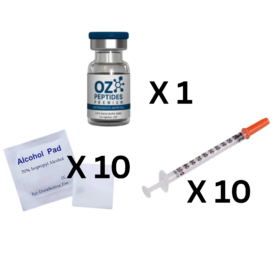 Starter Pack
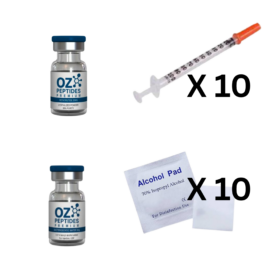 Retatrutide Starter Bundle
 5-Amino-1MQ Dosage Guide (5mg)
Peptide Guides
Retatrutide vs Tirzepatide: Which Multi-Agonist Leads Metabolic Research in 2026?
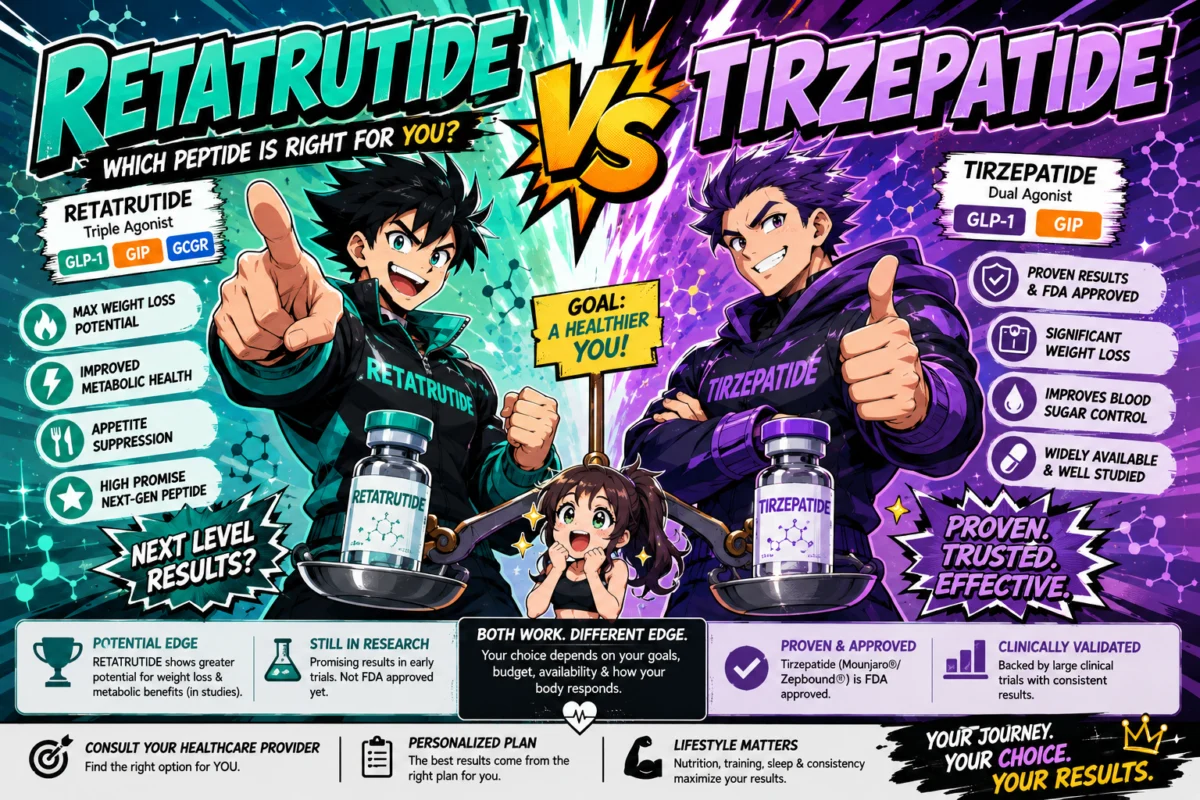
Key Takeaways
- Retatrutide is a triple agonist (GLP-1 + GIP + glucagon) achieving 24.2% mean weight loss in Phase 2 trials.
- Tirzepatide is a dual agonist (GLP-1 + GIP) achieving 22.5% mean weight loss in SURMOUNT trials.
- The key differentiator is glucagon receptor agonism — Retatrutide uniquely increases energy expenditure while suppressing appetite.
- Both use weekly subcutaneous dosing with similar half-lives (~5-6 days) and titration schedules.
- Tirzepatide has FDA approval; Retatrutide is in Phase 3 (TRIUMPH) with potentially broader metabolic effects.
The race to develop the most effective metabolic research peptide has intensified. Two compounds have pulled ahead of the pack: Retatrutide (Eli Lilly’s triple agonist) and Tirzepatide (Eli Lilly’s dual agonist, already marketed as Mounjaro/Zepbound).
For Australian researchers designing metabolic protocols, understanding the precise differences between these two powerhouses isn’t optional — it’s essential. This head-to-head comparison breaks down the receptor science, clinical data, dosing protocols and practical implications so you can make an informed research decision.
At a Glance: Retatrutide vs Tirzepatide
| Feature | Retatrutide | Tirzepatide |
| Developer | Eli Lilly | Eli Lilly |
| Receptor targets | GLP-1, GIP, Glucagon | GLP-1, GIP |
| Agonist class | Triple agonist | Dual agonist |
| Development code | LY3437943 | LY3298176 |
| Brand names | N/A (Phase 3) | Mounjaro, Zepbound |
| Phase 2 weight loss | 24.2% | 22.5% |
| Half-life | 5-6 days | 5 days |
| Dosing frequency | Weekly | Weekly |
| Max research dose | 12mg | 15mg |
| FDA status | Phase 3 (TRIUMPH) | Approved (2022-2023) |
| TGA status | Not approved | Approved (2024) |
| Mechanism | Appetite suppression + energy expenditure | Appetite suppression + metabolic enhancement |
Receptor Pharmacology: The Science Behind the Difference
The GLP-1 Component (Shared)
Both compounds activate the glucagon-like peptide-1 (GLP-1) receptor, producing:
- Appetite suppression via hypothalamic and brainstem signalling
- Delayed gastric emptying (enhanced satiety)
- Glucose-dependent insulin secretion
- Reduced glucagon secretion (during hyperglycaemia)
This is the foundational mechanism present in all major GLP-1 class compounds including semaglutide, liraglutide and dulaglutide.
The GIP Component (Shared)
Both compounds also activate the glucose-dependent insulinotropic polypeptide (GIP) receptor:
- Enhanced postprandial insulin secretion (incretin effect amplification)
- Improved lipid clearance and triglyceride metabolism
- Potential protection of pancreatic beta cell function
- Complementary metabolic effects to GLP-1
The GLP-1 + GIP combination is what makes Tirzepatide a “twincretin” — and it’s highly effective. But Retatrutide adds something more.
The Glucagon Component (Retatrutide Only)
This is the game-changer. Retatrutide uniquely activates the glucagon receptor, adding a third dimension:
| Effect | Mechanism |
| Increased energy expenditure | Hepatic thermogenesis and futile cycling |
| Enhanced hepatic fat oxidation | Increased lipolysis and fatty acid utilisation |
| Improved lipid profile | Reduced hepatic VLDL secretion |
| Potential ketogenesis | Enhanced ketone body production during fasting states |
Glucagon is traditionally viewed as a “counter-regulatory” hormone that raises blood glucose. However, in the context of Retatrutide’s triple mechanism — where GLP-1 and GIP provide robust glucose control — the glucagon component primarily drives energy expenditure without compromising glycaemic control.
This is the key theoretical basis for Retatrutide’s superior weight loss outcomes: it doesn’t just reduce energy intake (like GLP-1 agonists); it also increases energy output.
Clinical Data Head-to-Head
Weight Loss Outcomes
| Trial/Parameter | Retatrutide | Tirzepatide |
| Phase 2 mean weight loss | 24.2% | 22.5% (SURMOUNT-1) |
| Proportion achieving ≥20% loss | Higher (dose-dependent) | ~50-60% at 15mg |
| Proportion achieving ≥25% loss | ~40-50% at 12mg | ~30-40% at 15mg |
| Time to significant loss | 12-16 weeks | 12-16 weeks |
While the absolute difference appears modest (1.7 percentage points), the implications are significant. Retatrutide is the first pharmacological agent to consistently achieve >24% mean weight reduction — approaching the territory historically reserved for bariatric surgical interventions.
Glycaemic Control
| Parameter | Retatrutide | Tirzepatide |
| HbA1c reduction | ~2.0-2.2% | ~2.0-2.3% (SURPASS programme) |
| Fasting glucose reduction | Significant | Significant |
| Insulin sensitivity | Markedly improved | Improved |
Both compounds demonstrate exceptional glycaemic efficacy, with little practical difference in diabetes management outcomes.
Cardiometabolic Parameters
| Parameter | Retatrutide | Tirzepatide |
| Systolic BP reduction | ~8-10 mmHg | ~6-8 mmHg |
| Triglyceride reduction | ~30-35% | ~25-30% |
| HDL increase | ~8-10% | ~6-8% |
| LDL reduction | ~10-15% | ~8-12% |
| ALT/AST improvement | Significant (hepatic fat) | Significant |
Retatrutide’s glucagon component may confer modest advantages in lipid metabolism and blood pressure — areas requiring further investigation in the TRIUMPH programme.
Safety Profile Comparison
| Side Effect | Retatrutide | Tirzepatide |
| Nausea | ~47% | ~30-35% |
| Diarrhoea | ~25% | ~20-23% |
| Vomiting | ~20% | ~12-15% |
| Constipation | ~12% | ~10-12% |
| Heart rate increase | ~2-4 bpm | ~1-2 bpm |
| Gallbladder events | Elevated | Elevated |
Retatrutide shows slightly higher gastrointestinal event rates, likely attributable to the additional glucagon receptor activation. The heart rate increase is also marginally more pronounced — a known effect of glucagon pathway modulation that requires monitoring in cardiovascular research.
Dosing Protocol Comparison
Retatrutide Research Titration
| Phase | Duration | Dose | Notes |
| Initial | Weeks 1-4 | 1-2mg weekly | Tolerance assessment |
| Titration 1 | Weeks 5-8 | 5mg weekly | Therapeutic threshold |
| Titration 2 | Weeks 9-12 | 8-10mg weekly | Enhanced response |
| Maintenance | Weeks 13+ | 12mg weekly | Maximum research dose |
Tirzepatide Research Titration
| Phase | Duration | Dose | Notes |
| Initial | Weeks 1-4 | 2.5mg weekly | Initiation only |
| Titration 1 | Weeks 5-8 | 5mg weekly | First therapeutic |
| Titration 2 | Weeks 9-12 | 7.5-10mg weekly | Standard range |
| Maintenance | Weeks 13+ | 12-15mg weekly | Maximum approved |
Both compounds follow conservative titration schedules to minimise GI adverse effects. The key difference is Tirzepatide’s higher maximum dose (15mg vs 12mg) — offset by Retatrutide’s additional receptor target.
Cost Comparison for Australian Researchers
| Factor | Retatrutide | Tirzepatide |
| 5mg vial | $60-85 AUD | $70-95 AUD |
| 10mg vial | $100-140 AUD | $110-150 AUD |
| 20mg vial | $180-240 AUD | $200-260 AUD |
| Monthly cost (mid-dose) | $150-250 AUD | $180-300 AUD |
| Availability | Research-grade only | Research-grade / prescription (TGA approved) |
Which Compound for Which Research?
Choose Retatrutide When:
- Investigating energy expenditure mechanisms and thermogenesis
- Researching hepatic fat metabolism and NAFLD/NASH models
- Protocols require maximum weight loss efficacy
- Studying triple-receptor synergy and novel metabolic pathways
- Exploring ketone body metabolism research
Choose Tirzepatide When:
- Prioritising established safety data and regulatory approval
- Researching Type 2 diabetes management with extensive published outcomes
- Protocols require lower GI event rates
- Seeking maximum commercial availability and supply stability
- Investigating incretin-based combination therapies
A Note on Future Research
With the TRIUMPH programme delivering data throughout 2026, Retatrutide’s full clinical picture will become clearer. Early signals suggest potential advantages in:
- NAFLD/NASH resolution (hepatic fat metabolism via glucagon)
- Obstructive sleep apnoea (TRIUMPH-OSA trial)
- Cardiovascular outcomes (TRIUMPH-CV trial — long-term MACE data)
If these trials confirm superiority, Retatrutide could reshape metabolic research priorities significantly.
Frequently Asked Questions
What’s the main difference between Retatrutide and Tirzepatide?
Retatrutide is a triple agonist activating GLP-1, GIP and glucagon receptors, while Tirzepatide is a dual agonist activating only GLP-1 and GIP. The additional glucagon receptor activation gives Retatrutide a unique energy expenditure mechanism.
Which is more effective for weight loss — Retatrutide or Tirzepatide?
Phase 2 data shows Retatrutide achieving 24.2% mean weight loss vs Tirzepatide’s 22.5%. While the difference is modest, Retatrutide is the first pharmacological agent to exceed 24% mean weight reduction in clinical trials.
Is Retatrutide safer than Tirzepatide?
Both compounds demonstrate acceptable safety profiles. Retatrutide shows slightly higher GI event rates (nausea ~47% vs ~35%) and marginally greater heart rate increases. Long-term safety data from TRIUMPH will provide more definitive comparisons.
Can Retatrutide and Tirzepatide be used together?
There is no published research on combined use, and co-administration is not recommended. Both compounds target overlapping receptor pathways, making combination potentially redundant and increasing adverse event risk.
Which compound is better for diabetes research?
Both demonstrate exceptional glycaemic efficacy with HbA1c reductions of ~2.0-2.3%. Tirzepatide has more extensive published diabetes data (SURPASS programme). Retatrutide may offer advantages in metabolic syndrome models with fatty liver components.
When will Retatrutide be available in Australia?
TGA submission is expected following TRIUMPH programme completion (2025-2026). Potential approval could occur in late 2026 or 2027, with PBS listing following standard assessment timelines.
How do the costs compare for research?
Retatrutide research-grade supply is typically 10-15% less expensive than Tirzepatide due to differences in availability and demand. Expect $150-250/month for mid-dose Retatrutide research vs $180-300/month for Tirzepatide.
Conclusion: The Verdict for 2026
For Australian researchers, the choice between Retatrutide and Tirzepatide depends on your specific research objectives:
- Maximum metabolic innovation? → Retatrutide’s triple mechanism and glucagon-driven energy expenditure offer the most exciting research frontier.
- Established data and regulatory clarity? → Tirzepatide’s approved status and extensive published literature provide the strongest foundation.
The 1.7% weight loss difference, while statistically significant, may be less important than the mechanistic insights each compound offers. For many research programmes, both compounds warrant investigation — either in parallel or sequential protocols.
Ready to decide? [Browse research-grade Retatrutide] or [explore Tirzepatide research supply]. For methodology guidance, [view our peptide reconstitution and handling protocols].
References & Further Reading
Coskun T, Sloop KW, Loghin C, et al. LY3298176, a novel dual GIP and GLP-1 receptor agonist for the treatment of type 2 diabetes mellitus. Diabetes Care. 2018;41(8):1734-1741. https://pubmed.ncbi.nlm.nih.gov/29773637/
Rosenstock J, Tuttle KR, Sarwan G, et al. Triple hormone receptor agonist retatrutide for the treatment of type 2 diabetes: a phase 2 trial. Lancet Diabetes & Endocrinology. 2023;11(10):755-766. https://pubmed.ncbi.nlm.nih.gov/37478870/
Jastreboff AM, Aronne LJ, Ahmad NN, et al. Tirzepatide Once Weekly for the Treatment of Obesity. New England Journal of Medicine. 2022;387(3):205-216. https://pubmed.ncbi.nlm.nih.gov/35658024/
Ludvik B, Giorgino F, Jodar E, et al. Once-weekly tirzepatide versus once-daily insulin degludec as add-on to metformin with or without SGLT2 inhibitors in patients with type 2 diabetes (SURPASS-3). Lancet. 2021;398(10313):583-598. https://pubmed.ncbi.nlm.nih.gov/34358458/
Rosenstock J, Sorli C, DeFronzo R, et al. Triple hormone receptor agonist Retatrutide — glucose lowering and weight reduction in type 2 diabetes. Nature Medicine. 2024;30:2049-2057. https://pubmed.ncbi.nlm.nih.gov/38693299/
Gastaldelli A, Cusi K, Fernandez Lando L, et al. Effect of tirzepatide on liver fat content and abdominal adipose tissue in type 2 diabetes. Lancet Diabetes & Endocrinology. 2022;10(6):393-406. https://pubmed.ncbi.nlm.nih.gov/35525293/
Therapeutic Goods Administration (TGA). Australian Register of Therapeutic Goods — Mounjaro (tirzepatide). TGA ARTG. 2024. https://www.tga.gov.au/resources/prescription-medicines-registrations/mounjaro
