

 Weight Loss
 Injury and Repair
 Muscle Building
 Anti-aging
 Cognitive Function
 3ml Benzyl Alcohol Bacteriostatic Water
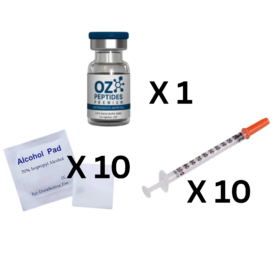 Starter Pack
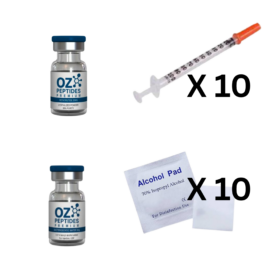 Retatrutide Starter Bundle
 5-Amino-1MQ Dosage Guide (5mg)
Peptide Guides
Peptide Storage Guide Australia | How To Store Peptides Properly
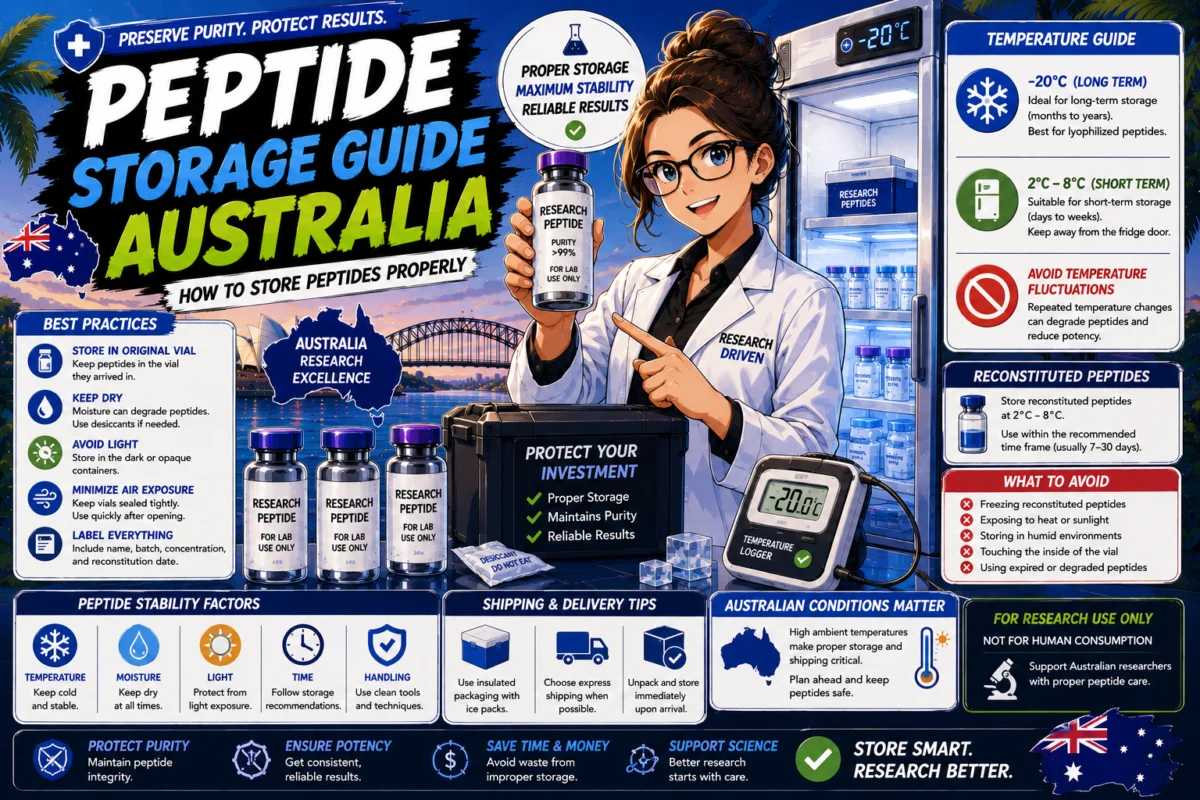
Peptide Storage Guide Australia | How To Store Peptides Properly
Bad Peptide storage is one of the fastest ways to ruin a peptide vial. A compound that should remain stable for months can degrade quickly if it’s handled poorly, contaminated, exposed to heat, or stored incorrectly after reconstitution. Understanding how to store peptides properly is essential for maintaining their effectiveness.
At the same time, recent peptide testing and industry discussion suggest properly manufactured lyophilized peptides may be more stable than many people think.
According to public discussions involving Peter Magic from Janoshik Analytical, many traditional peptide storage “rules” may be overly cautious, especially for properly manufactured dry powder peptides. However, sterility and contamination still matter heavily once peptides are mixed with water.
This guide breaks down:
- How to store peptides before reconstitution
- How long peptides last after mixing
- Bac water vs sterile water vs saline
- Freezing myths
- Signs a peptide has gone bad
- Proper peptide storage and handling practices
This article is educational only and intended for research discussion purposes.
Before Reconstitution (Dry Powder Peptide Storage)
Lyophilized peptides are generally far more stable than reconstituted peptides. The dry powder form protects the compound from many of the degradation issues seen after water is introduced.
Room Temperature Peptide Storage
For short shipping periods, most peptides tolerate room temperature surprisingly well.
Many properly manufactured dry peptides can remain stable during normal shipping conditions for several days without major degradation. This is why temporary temperature exposure during transit usually does not destroy a vial.
That said, long-term room temperature storage is not ideal.
Refrigerator Peptide Storage
The refrigerator is considered the best balance for short to medium-term peptide storage.
Recommended temperature:
- 2°C to 8°C
- 36°F to 46°F
This helps maintain peptide stability for extended periods while avoiding repeated temperature swings.
Products like:
- Retatrutide
- Tirzepatide
- Semaglutide
- CJC-1295
- BPC-157
- TB-500
are commonly stored refrigerated before use.
Freezer Peptide Storage
For long-term storage, freezing dry powder peptides is commonly recommended.
A standard household freezer is generally sufficient. Deep freezing at ultra-low temperatures is usually unnecessary for consumer research storage.
Properly manufactured dry peptide vials may remain stable for extremely long periods when frozen and protected from moisture and light.
After Reconstitution (Mixed With Water)
Once water enters the vial, contamination risk becomes the main concern.
The peptide itself may remain chemically stable longer than expected, but bacterial growth and sterility issues become the real danger.
Refrigerate Immediately
After reconstitution:
- Store peptides in the refrigerator immediately
- Avoid repeated warming and cooling
- Keep away from light exposure
Never leave mixed peptides sitting at room temperature for long periods unnecessarily.
The 28-Day Recommendation
The commonly accepted recommendation is:
- Use reconstituted peptides within 28 days
This timeframe exists largely due to sterility concerns rather than instant peptide degradation.
Proper sterile handling dramatically affects longevity.
Can Peptides Last Longer Than 28 Days?
Some evidence and anecdotal testing suggest certain peptides may remain chemically stable for 6 to 8 weeks refrigerated.
However:
- contamination risk increases over time
- repeated punctures increase exposure
- improper handling multiplies risk quickly
If there is any uncertainty about sterility, the safest option is disposal.
Never Freeze Reconstituted Peptides
One of the most repeated warnings in peptide handling is avoiding freezing after reconstitution.
Freezing mixed peptides may:
- damage peptide structure
- create instability during thawing
- increase aggregation risk
Dry powder handles freezing well. Reconstituted liquid generally does not.
Does Shaking Peptides Damage Them?
Traditional peptide advice says:
- swirl gently
- avoid shaking
- inject water slowly down the vial wall
However, recent industry discussion suggests properly manufactured peptides may be much less fragile than commonly believed.
According to Peter Magic from Janoshik discussions, many peptides in the research space tolerate shaking without meaningful degradation.
Still, cautious handling never hurts.
Best practice:
- gently swirl when possible
- avoid aggressive unnecessary shaking
- don’t panic if the vial gets moved around
Bac Water vs Sterile Water vs Saline
Bacteriostatic Water
Bacteriostatic water contains:
- 0.9% benzyl alcohol
This helps reduce bacterial growth and is the standard recommendation in many peptide communities.
Benefits:
- longer usability
- reduced contamination risk
- common industry standard
Potential downsides:
- irritation in sensitive users
- low-quality products may fail sterility standards
Sterile Water
Sterile water is another common option.
When handled properly and refrigerated:
- many users report no issue using sterile water for up to 28 days
The biggest factor is product quality and sterility.
Saline
Some discussions suggest saline may reduce local irritation compared to bacteriostatic water.
However:
- not every peptide dissolves equally well in saline
- sterility still matters heavily
The most important factor is using pharmaceutical-grade sterile products from reputable suppliers.
Proper Peptide Handling Practices
Always Swab The Vial
Use alcohol swabs before every draw.
This reduces bacterial introduction through the stopper.
Never Touch The Needle
If the needle contacts:
- skin
- bench tops
- counters
- clothing
replace it immediately.
Minimize Punctures
Repeated punctures slowly increase contamination risk.
Using appropriately sized vials for your protocol helps reduce long-term exposure.
Protect Peptides From Light
Many peptides are light-sensitive, especially after reconstitution.
Store peptides:
- inside the fridge
- in dark containers
- away from direct sunlight
Even refrigerator lighting exposure over time may contribute to degradation.
Signs Your Peptide Has Gone Bad
Dispose of peptides if you notice:
Cloudiness
Mixed peptides should generally appear clear.
Floating Particles
Particles may indicate contamination or breakdown.
Color Changes
Unexpected discoloration is a warning sign.
Strong Smell
Most peptides are nearly odorless.
Reduced Effectiveness
Sudden loss of expected effect may indicate degradation or contamination.
When in doubt, throw it out.
Why Testing And Quality Matter
According to industry testing discussions:
- sterility failures matter more than purity alone
- contamination is one of the largest risks
- blind third-party testing provides stronger transparency
This is why many researchers prioritize:
- independent COAs
- reputable suppliers
- verified testing standards
You can learn more through:
Quick Peptide Storage Reference
| Situation | Recommendation |
|---|---|
| Dry powder short-term | Room temp acceptable |
| Dry powder long-term | Refrigerate or freeze |
| Reconstituted peptides | Refrigerate immediately |
| Reconstituted freezer storage | Avoid |
| Light exposure | Minimize |
| Bac water | Standard option |
| Sterile water | Works when handled properly |
| Saline | May reduce irritation |
| Cloudy peptide | Discard |
| Floating particles | Discard |
How long do peptides last in the fridge?
Dry powder peptide storage may last months or years refrigerated depending on the compound and manufacturing quality. Reconstituted peptides are commonly recommended for use within 28 days.
Can peptides go bad at room temperature?
Reconstituted peptides should not remain at room temperature long-term. Dry powder peptides are significantly more stable.
Should peptides be frozen?
Dry powder peptides can be frozen for long-term storage. Reconstituted peptides generally should not be frozen.
Does shaking peptides ruin them?
Many properly manufactured peptides appear more stable than traditional advice suggests, though gentle handling is still recommended.
What is the best water for peptides?
Bacteriostatic water is the most common standard, though sterile water and saline are also used when properly handled.
