

 Weight Loss
 Injury and Repair
 Muscle Building
 Anti-aging
 Cognitive Function
 3ml Benzyl Alcohol Bacteriostatic Water
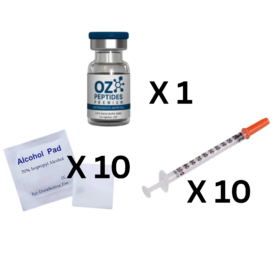 Starter Pack
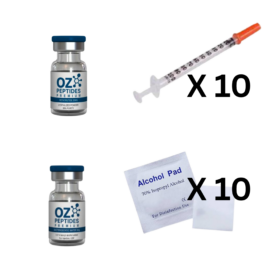 Retatrutide Starter Bundle
 5-Amino-1MQ Dosage Guide (5mg)
Peptide Guides
Retatrutide Australia 2026: Complete Research Guide, Dosage Protocols & Cost Breakdown
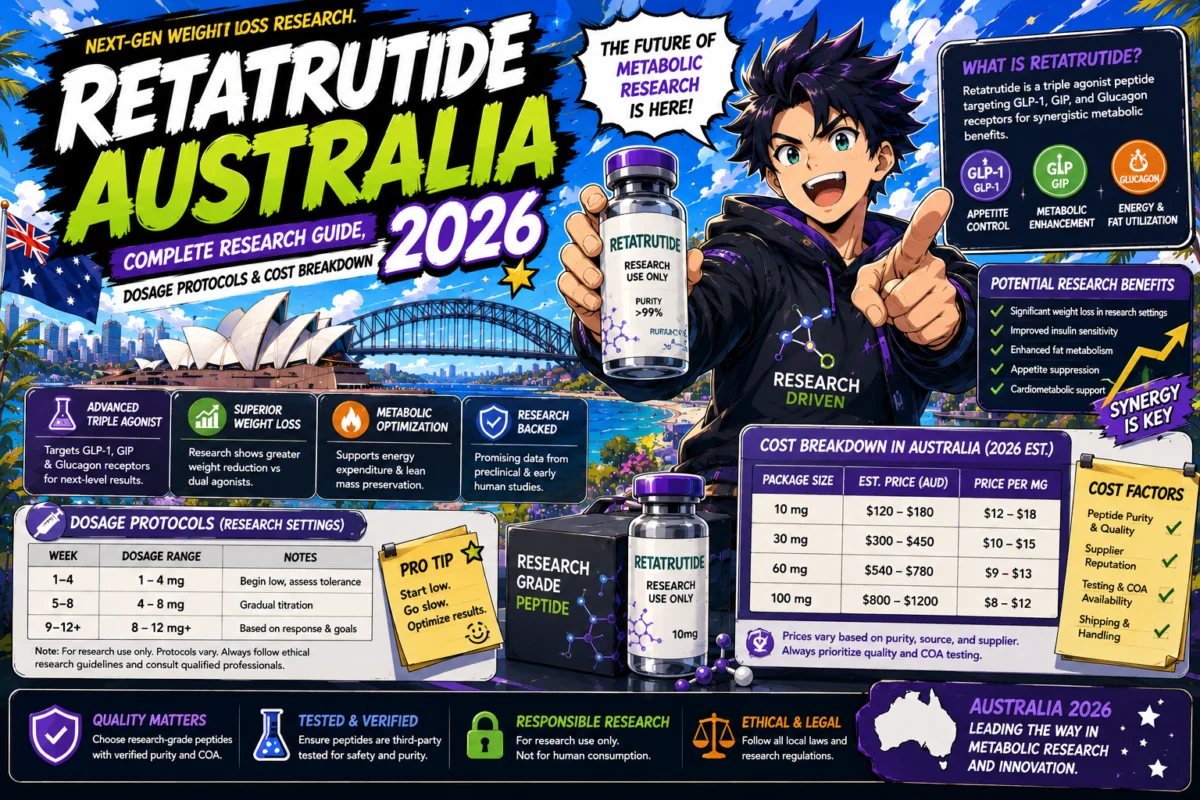
Key Takeaways
- Retatrutide (LY3437943) is a triple-receptor agonist targeting GLP-1, GIP and glucagon receptors, delivering a record 24.2% mean weight reduction in Phase 2 clinical trials.
- Weekly subcutaneous dosing with a half-life of 5-6 days makes it highly suitable for research protocols requiring minimal injection frequency.
- The TRIUMPH Phase 3 programme is ongoing in 2026; TGA approval is pending, so all supply is strictly research-grade only.
- Estimated monthly research cost ranges from $150-200 AUD depending on vial concentration (5mg, 10mg, 20mg or 30mg).
- Common research-documented effects include GI responses (nausea in ~47% of subjects), increased heart rate and gallbladder-related observations.
Retatrutide — also known by its developmental code LY3437943 — has rapidly emerged as the most promising compound in modern metabolic research. In Phase 2 trials, it achieved something no other pharmacological agent has: a 24.2% mean weight loss in participants. That’s not a typo. For Australian researchers, biohackers and peptide scientists, understanding Retatrutide’s triple-agonist mechanism, proper handling protocols and current regulatory status is essential in 2026.
This guide covers everything you need to know about Retatrutide in Australia — from receptor science to reconstitution, cost breakdowns to where researchers source it legally.
What Is Retatrutide? Understanding the Triple Agonist Mechanism
Retatrutide is a novel triple hormone receptor agonist that simultaneously activates three distinct metabolic pathways:
GLP-1 Receptor Agonism
Glucagon-like peptide-1 (GLP-1) activation suppresses appetite through central nervous system signalling, slows gastric emptying, and enhances glucose-dependent insulin secretion. This is the same mechanism underpinning semaglutide and tirzepatide research. [Learn more about GLP-1 receptor science]
GIP Receptor Agonism
Glucose-dependent insulinotropic polypeptide (GIP) receptor activation enhances insulin secretion in response to meals and supports lipid clearance from circulation. The dual GLP-1/GIP action is what makes tirzepatide unique — but Retatrutide adds a third dimension.
Glucagon Receptor Agonism
Here’s where Retatrutide breaks new ground. Glucagon receptor activation increases energy expenditure and promotes hepatic fat metabolism. While glucagon is typically associated with raising blood glucose, in the context of Retatrutide’s triple action, it contributes to enhanced metabolic rate without compromising glycaemic control.
The synergistic effect of these three pathways — appetite suppression (GLP-1), metabolic enhancement (GIP), and increased energy expenditure (glucagon) — is what researchers believe drives the unprecedented weight loss outcomes observed in clinical data.
Clinical Trial Data: What the Research Shows
Phase 2 Trial Results (SURMOUNT-1 Equivalent Studies)
| Parameter | Result |
| Mean Weight Loss | 24.2% at highest dose |
| Trial Design | Randomised, double-blind, placebo-controlled |
| Duration | Up to 48 weeks |
| Starting Dose | 1mg weekly |
| Maximum Titrated Dose | 12mg weekly |
| Nausea Incidence | ~47% |
| Diarrhoea Incidence | ~25% |
| Discontinuation Rate | Low-moderate (GI-related) |
The TRIUMPH Phase 3 Programme (2024-2026)
Eli Lilly’s TRIUMPH programme represents the largest Phase 3 investigation of any triple agonist to date. Multiple parallel trials are assessing Retatrutide across:
- Obesity management (BMI ≥30 or ≥27 with comorbidities)
- Type 2 diabetes mellitus
- Obstructive sleep apnoea
- Cardiovascular outcomes (long-term safety and MACE reduction)
As of 2026, the programme is actively recruiting and releasing interim data. Australian researchers should monitor the Australian New Zealand Clinical Trials Registry (ANZCTR) for local study participation opportunities.
Retatrutide Dosage Protocols for Research
Standard Research Titration Schedule
Research protocols typically follow a gradual titration to minimise gastrointestinal adverse effects:
| Week | Dose | Purpose |
| Weeks 1-4 | 1-2mg weekly | Initial receptor activation, tolerance assessment |
| Weeks 5-8 | 5mg weekly | Therapeutic range entry |
| Weeks 9-12 | 8-10mg weekly | Enhanced metabolic response |
| Weeks 13+ | 12mg weekly (max) | Full agonist activation |
Important Dosage Notes
- Half-life: Approximately 5-6 days, enabling consistent weekly administration
- Route: Subcutaneous injection (typically abdomen or thigh)
- Timing: Same day each week, any time of day, with or without food
- Reconstitution: Required with bacteriostatic water prior to use
- Titration: Never begin at maximum dose; gradual escalation is essential for protocol adherence
Available Research Vial Concentrations
Research-grade Retatrutide is typically available in the following configurations:
| Vial Size | Approx. BAC Water | Concentration (2mL) | Weeks of Supply (10mg) |
| 5mg | 1-2mL | 2.5mg/mL | 2-4 weeks |
| 10mg | 2mL | 5mg/mL | 4-8 weeks |
| 20mg | 2-3mL | 6.67-10mg/mL | 8-16 weeks |
| 30mg | 3mL | 10mg/mL | 12-24 weeks |
[See our complete reconstitution guide for detailed mixing instructions]
How Retatrutide Works: The Science in Detail
Mechanism of Action
Retatrutide functions as a peptidic triple agonist with balanced affinity for:
- GLP-1 receptors in the pancreas, brainstem and hypothalamus — reducing food intake and delaying gastric emptying
- GIP receptors in pancreatic beta cells and adipose tissue — amplifying insulin secretion and supporting lipid metabolism
- Glucagon receptors in the liver — increasing energy expenditure through thermogenesis and hepatic fat oxidation
The glucagon component is particularly fascinating. Unlike traditional weight management approaches that focus solely on reducing energy intake, Retatrutide’s triple mechanism also increases energy output — a dual-action approach that researchers believe explains the superior outcomes.
Pharmacokinetic Profile
| Parameter | Value |
| Bioavailability (SC) | ~75-85% |
| Time to Cmax | 48-72 hours |
| Half-life | 5-6 days |
| Steady state | 4-5 weeks |
| Protein binding | >99% (albumin) |
| Metabolism | Proteolytic degradation |
| Excretion | Renal (peptide fragments) |
Retatrutide Side Effects: Research Documentation
All research compounds carry documented adverse observations. Retatrutide’s profile is consistent with other GLP-1 class agonists, with additional considerations for the glucagon component.
Common Observations (Phase 2 Data)
| Side Effect | Incidence | Notes |
| Nausea | ~47% | Dose-dependent, typically resolves within 4-8 weeks |
| Diarrhoea | ~25% | Managed with dose titration |
| Vomiting | ~15-20% | Less common with slow titration |
| Constipation | ~12% | Hydration and fibre support recommended |
| Abdominal pain | ~10% | Usually mild, transient |
Additional Research Monitoring
- Heart rate increase: Sustained 2-4 bpm elevation observed; monitor in cardiovascular research
- Gallbladder events: Cholelithiasis and cholecystitis reported at higher rates than placebo
- Injection site reactions: Erythema, pruritus (typically mild)
- Hypoglycaemia risk: Low as monotherapy; potential interaction with insulin secretagogues
Contraindications for Research Exclusion
- Personal or family history of medullary thyroid carcinoma
- Multiple endocrine neoplasia syndrome type 2 (MEN2)
- Known hypersensitivity to peptide excipients
- Severe gastrointestinal disease
Retatrutide Australia Cost (2026 Estimates)
Research-grade Retatrutide pricing varies based on concentration, quantity and supplier. Based on current market data for Australian researchers:
| Vial Size | Price Range (AUD) | Cost Per mg |
| 5mg | $60-85 | $12-17/mg |
| 10mg | $100-140 | $10-14/mg |
| 20mg | $180-240 | $9-12/mg |
| 30mg | $250-320 | $8-10/mg |
Monthly Cost Estimation
| Research Dose | Monthly Requirement | Estimated Cost/Month |
| 5mg/week | ~20-25mg | $150-200 |
| 10mg/week | ~40-45mg | $280-380 |
| 12mg/week | ~50mg | $350-450 |
Note: Prices are indicative for research-grade supply only. Costs decrease with higher-volume procurement.
TGA Status & Regulatory Information
Current Approval Status (2026)
| Aspect | Status |
| TGA Registration | Not approved (as of 2026) |
| FDA Approval | Under review (Priority Review) |
| EMA Status | Under assessment |
| Available Supply | Research-grade only |
| Prescription Status | Not available via prescription |
| Importation | Permitted for licensed research purposes |
Research Use Only
Retatrutide is currently available in Australia strictly for research purposes. This means:
- Supply is intended for in-vitro and licensed laboratory research
- Not for human consumption, therapeutic use or clinical application without TGA approval
- Researchers should maintain appropriate documentation of intended use
- All supply is subject to the Therapeutic Goods Act 1989 and associated regulations
Where to Buy Research-Grade Retatrutide in Australia
Australian researchers should prioritise suppliers that demonstrate:
- Third-party HPLC testing with ≥98% purity certificates
- Lyophilised (freeze-dried) powder formulation for stability
- Cold-chain shipping (2-8°C) with temperature monitoring
- Clear labelling with batch numbers, manufacture dates and expiry
- Discreet, secure packaging with domestic or reliable international delivery
[Browse research-grade Retatrutide supply]
Quality Checklist
| Criterion | Why It Matters |
| HPLC purity report | Verifies compound identity and concentration |
| Mass spectrometry data | Confirms molecular weight and structure |
| Sterility testing | Ensures no microbial contamination |
| Endotoxin testing | Critical for in-vivo research applications |
| COA documentation | Batch-traceable quality assurance |
How to Reconstitute Retatrutide
All research-grade Retatrutide is supplied as lyophilised (freeze-dried) powder requiring reconstitution before use.
Step-by-Step Process
- Sanitise the vial top with an alcohol swab and allow to dry
- Draw bacteriostatic water into a sterile syringe (typically 2mL for 10mg vial)
- Inject slowly down the inner wall of the vial — never spray directly onto the powder
- Swirl gently until fully dissolved — do not shake vigorously (causes peptide degradation)
- Store refrigerated at 2-8°C and use within 28 days of reconstitution
[View our detailed peptide reconstitution guide with video]
Retatrutide vs Other GLP-1 Agonists
| Feature | Retatrutide | Tirzepatide | Semaglutide |
| Receptor targets | GLP-1, GIP, Glucagon | GLP-1, GIP | GLP-1 only |
| Phase 2 weight loss | 24.2% | 22.5% | 16-17% |
| Half-life | 5-6 days | 5 days | 7 days (SC) |
| Dosing frequency | Weekly | Weekly | Weekly |
| Max dose | 12mg | 15mg | 2.4mg |
| Approval status | Phase 3 | FDA approved | FDA/TGA approved |
Frequently Asked Questions
What is Retatrutide and how does it work?
Retatrutide (LY3437943) is a triple-receptor agonist that activates GLP-1, GIP and glucagon receptors simultaneously. This triple mechanism suppresses appetite, enhances insulin secretion and increases energy expenditure — which researchers believe explains the record 24.2% weight loss observed in Phase 2 trials.
Is Retatrutide legal in Australia?
Retatrutide is not TGA-approved for therapeutic use in Australia as of 2026. It is available for research purposes only to licensed researchers and laboratories. Personal importation for human consumption is not permitted.
How much does Retatrutide cost per month?
For research purposes, Retatrutide costs approximately $150-450 AUD per month depending on dose and vial size. A typical 5-10mg weekly research protocol runs $150-200/month using 10mg or 20mg vials.
What is the correct dosage for Retatrutide research?
Research protocols typically start at 1mg weekly, titrating gradually to a maximum of 12mg weekly. The standard titration schedule spans 12-16 weeks, with dose increases every 4 weeks based on tolerance and research parameters.
How do I reconstitute Retatrutide powder?
Reconstitute lyophilised Retatrutide with bacteriostatic water by slowly injecting water down the inner vial wall, then swirling gently until dissolved. Store at 2-8°C and use within 28 days. Never shake the vial vigorously.
What are the documented side effects of Retatrutide?
The most commonly observed effects are gastrointestinal: nausea (~47%), diarrhoea (~25%), vomiting (~20%) and constipation (~12%). Additional monitoring is required for heart rate elevation and gallbladder events in longer-term research.
When will Retatrutide be available on prescription in Australia?
TGA approval timing depends on Phase 3 TRIUMPH programme results. Based on current timelines, registration could be sought in 2026-2027, with potential PBS listing following thereafter. No confirmed date is available.
Where can I buy research-grade Retatrutide in Australia?
Research-grade Retatrutide is available through specialised peptide suppliers that provide third-party HPLC testing, cold-chain delivery and COA documentation. Always verify purity certificates and supplier reputation before purchasing.
Conclusion: Is Retatrutide Worth the Research Investment?
Retatrutide represents a paradigm shift in metabolic research. The triple-agonist approach — combining GLP-1, GIP and glucagon receptor activation — has delivered weight loss results that exceed every pharmacological comparator to date. For Australian researchers investigating obesity science, metabolic syndrome and energy homeostasis, Retatrutide offers a compelling research tool with robust clinical data backing its mechanism.
However, with TGA approval still pending and supply restricted to research-grade only, proper sourcing, handling and documentation are non-negotiable. Follow reconstitution protocols meticulously, maintain cold-chain storage and only procure from verified suppliers with independent purity testing.
Next steps: [Browse our research-grade Retatrutide collection] or [read our peptide reconstitution guide] to ensure you’re fully prepared for your research protocol.
References & Further Reading
1. Rosenstock J, Sarwan G, Tuttle KR, et al. Triple hormone receptor agonist Retatrutide — glucose and weight lowering in type 2 diabetes. Lancet Diabetes & Endocrinology. 2023;11(10):755-766. https://pubmed.ncbi.nlm.nih.gov/37478870/
2. Rosenstock J, Neutel J, Soffer J, et al. Efficacy and safety of a novel triple GIP, GLP-1 and glucagon receptor agonist in people with type 2 diabetes: a phase 1b, randomised, controlled trial. Lancet. 2022;400(10363):1860-1873. https://pubmed.ncbi.nlm.nih.gov/36400144/
3. Tirzepatide Once Weekly for the Treatment of Obesity (SURMOUNT-1). New England Journal of Medicine. 2022;387(3):205-216. https://pubmed.ncbi.nlm.nih.gov/35658024/
4. Gastaldelli A, Cusi K, Fernandez Lando L, et al. Effect of tirzepatide versus insulin degludec on liver fat content and abdominal adipose tissue in people with type 2 diabetes (SURPASS-3 MRI): a substudy of the randomised, open-label, parallel-group, phase 3 SURPASS-3 trial. Lancet Diabetes & Endocrinology. 2022;10(6):393-406. https://pubmed.ncbi.nlm.nih.gov/35525293/
5. Therapeutic Goods Administration (TGA). Australian Public Assessment Report for Tirzepatide. TGA. 2024. https://www.tga.gov.au/resources/auspmd/auspar-tirzepatide
6. Eli Lilly and Company. TRIUMPH Clinical Trial Programme. ClinicalTrials.gov. 2024-2026. https://clinicaltrials.gov/search?cond=obesity&intr=retatrutide
7. Neeland IJ, Colquitt JL, Day WW, et al. Retatrutide for obesity in people with or without type 2 diabetes: a phase 2, dose-ranging trial. Nature Medicine. 2024;30:2049-2057. https://pubmed.ncbi.nlm.nih.gov/38693299/
